First example
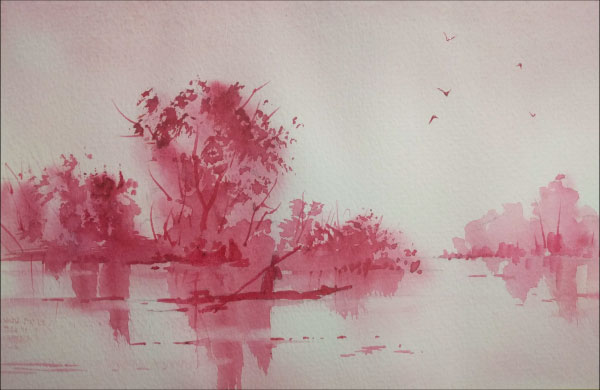
The first exercise is a very simple, single colour painting. Generally speaking, landscapes are very instructive for beginners because they allow students to get comfortable with the mean without any concerning commitment to a long drawing process. Despite its essential nature, this painting illustrates nicely all the main elements of watercolour landscapes:
- focal point
- intermediate layer
- background
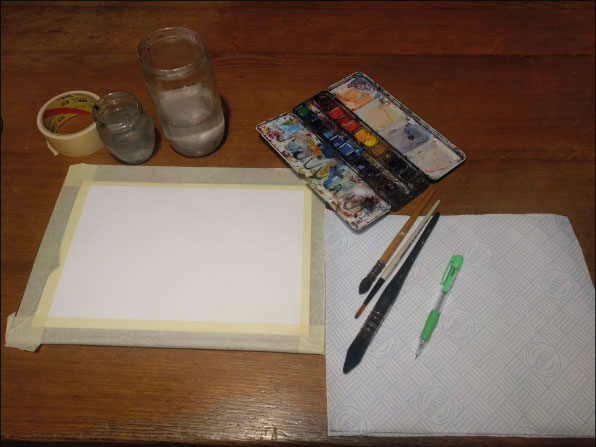 Prepare the dry paper on a wooden board stretching it with some tape along the edges. Keep two water containers close: one will be used to clean the brushes, the other one will hold clean water which is going to be transferred on the paper. You will have to use a paper towel to control the amount of water on your brushes while you will be proceeding through the various stages of the painting.
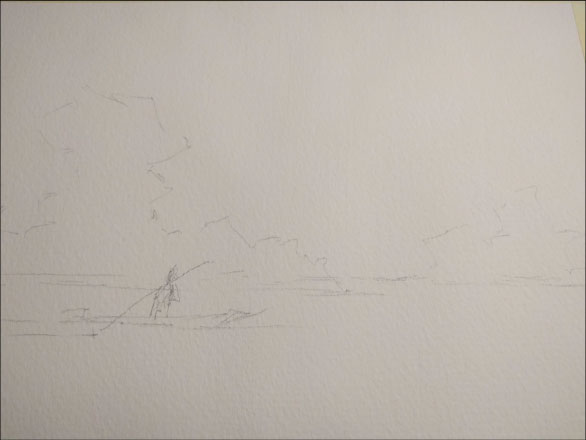
Begin by lightly drawing the main elements of the scene, then choose a colour. For your colour of choice, try to avoid bright yellows and greens. Incline your board towards you at around a 30 degrees angle. Cover the entire paper with abundant clean water. Don’t be shy! If you think the water is enough, add a little more.
Wet on wet
Start painting from the top of the wet paper with large, horizontal smooth strokes. Pull the colour downwards towards you without recharging the brush, until you’ve reached the horizon line. Do not paint over the same area twice and let the brush gradually empty onto the paper. Once at the horizon line, repeat the same process from the bottom up.
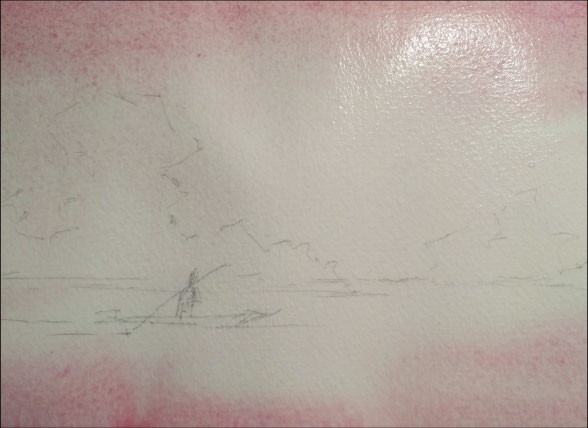
While the paper is still wet, collect more pigment. Pay attention to the amount of colour on your brush and then drop some colour to create the shapes of the trees. Let the painting bleed into the river area to create shadows and reflections. Do the same on the right side as well, trying to use less colour in order to suggest greater distance and depth. Lay your painting flat and let it dry. During this phase it is of prime importance not to have a lot of water on the brush. Use the paper towel to dry your brush a little before using it on the paper, otherwise annoying stains will form, if the brush holds too much water.
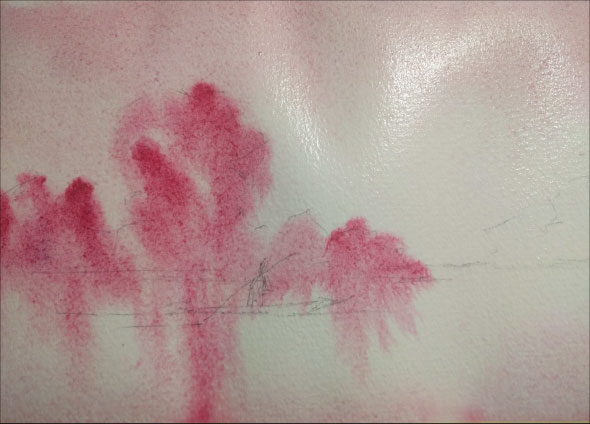
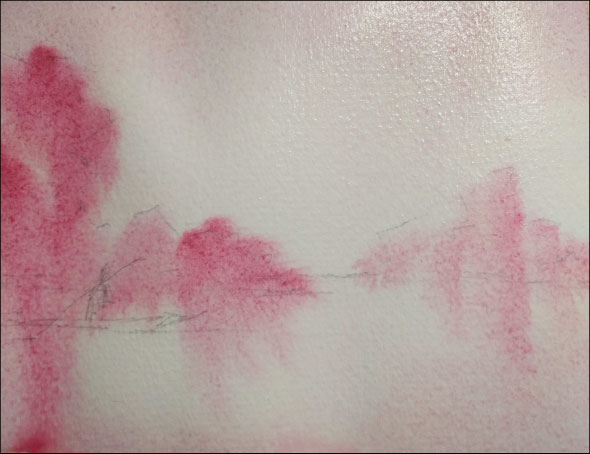
Wet on dry
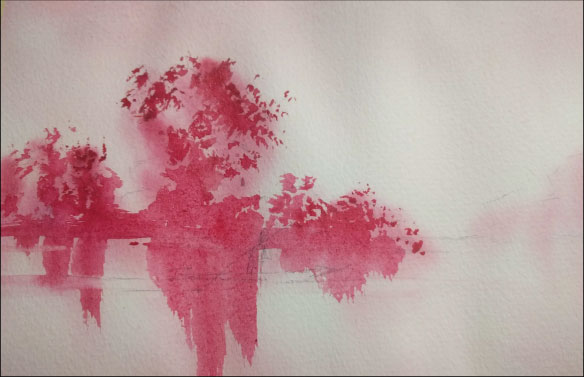
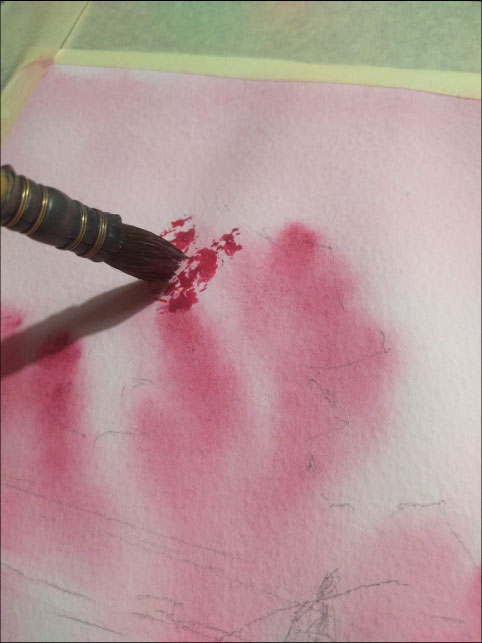
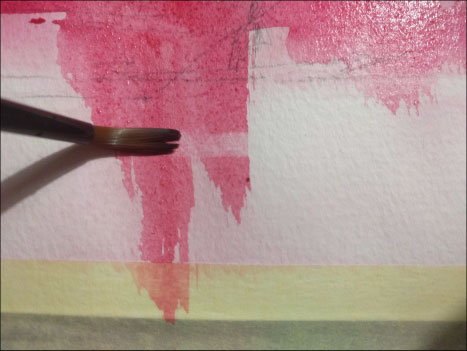
Once the painting has dried, go back to work on the trees. Use a medium size brush. In this instance, the brush you’re using should be just damp and not full of water as it was before. Spread the tip of your brush by pressing it on the board as it is shown in the picture. Using this technique will allow you to paint chaotic and random foliage. Reinforce the reflections on the river as well by dragging the pigment down with the side of the brush. Let the painting dry again. For a more realistic effect, drag a dry and clean brush across the reflections. It will be easier if the painting is still wet.
Paint the details using dense colour and a small brush. Begin with the fisherman and his boat.
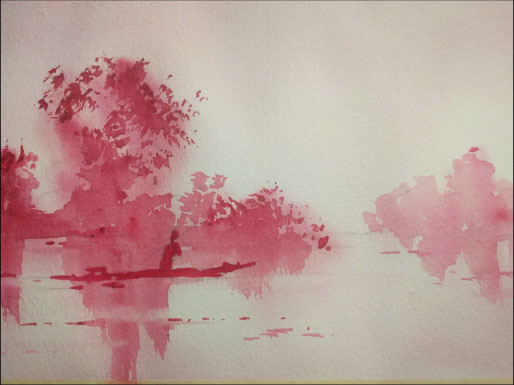
Let’s take a break to consider our process. We began painting in wide, wet layers holding a lot of water. Now our colour got stronger and the water we’re using is much less. Managing this transition is one of the key elements of watercolour painting. If you have to use more intense colour, you will have to collect more pigment on your brush.
While collecting colour from the pallet, use the least amount of water possible: it has to be barely enough to pick up colour on the brush. Train yourself to recognize at first glance how much pigment or water there is on the brush you’re using.
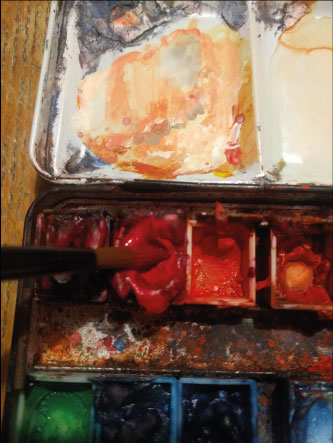
Details and final touches
Add complexity and richness to the foliage using the rigger brush. Paint a few big trounces first, then proceed to draw smaller, thinner brunches. Don’t be too rigorous and don’t forget to paint the corresponding reflections on the river.
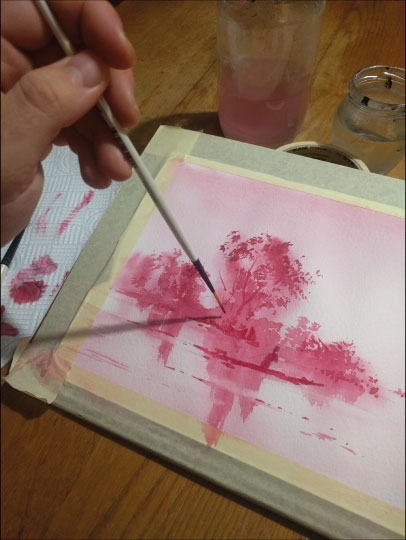
Complete the painting with some more details on the fisherman and a couple of birds in the sky. They will make your painting look lively and interesting. Congratulations, you just took your first steps into a wider world made of wanders and dreams.